ecl-logo Documentation

UploadGradientMethod

UploadGradientMethod[methodName]methodObject

returns an object methodObject that contains the information given about the gradient.

UploadGradientMethod[]methodObject

returns an object methodObject that contains the information given about the gradient.

Details

    Input

    Output

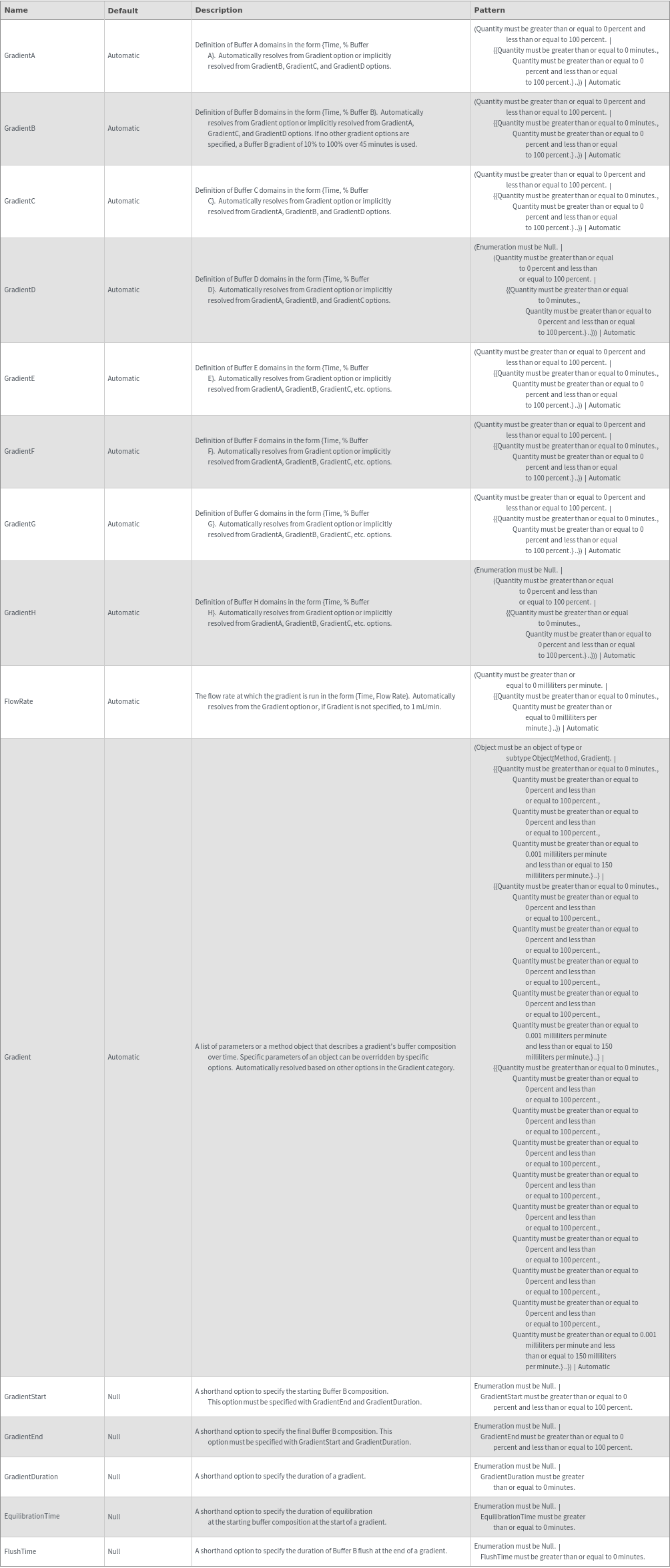
    Gradient Options
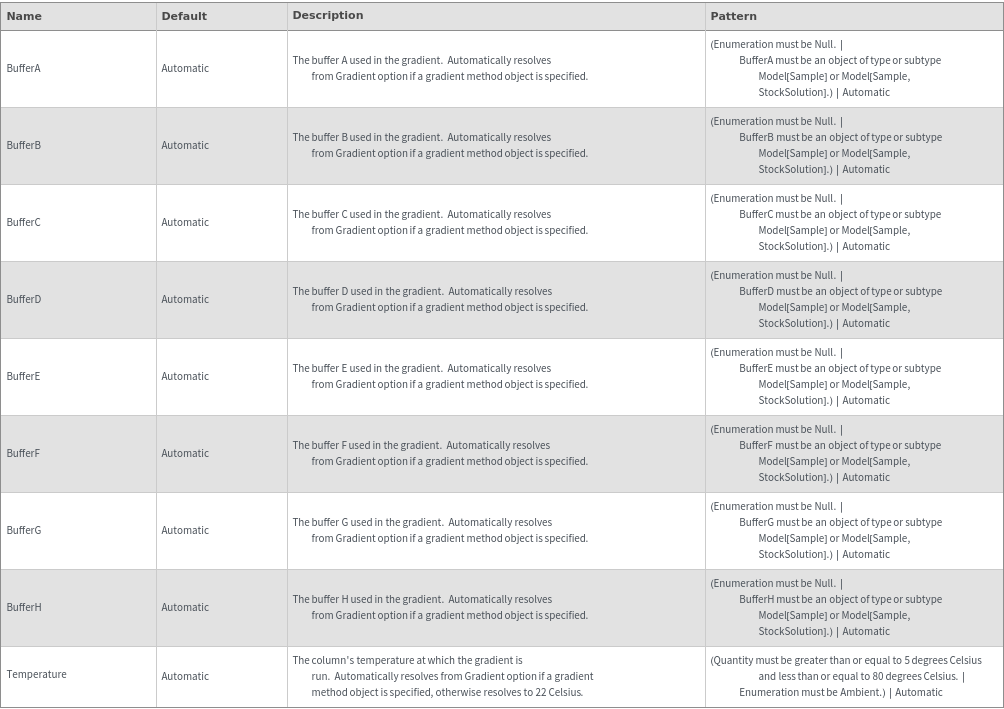
    General Options
Examples

Basic Examples  (2)

Create a new gradient method based on the provided inputs:

Create a new gradient method without a name:

Additional Examples  (1)

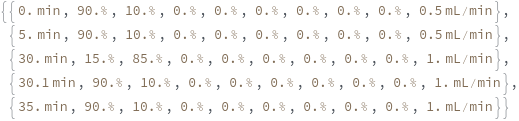
If not all timepoints are specified for all specified options, interpolates to fill in the missing timepoints:

Options  (30)

BufferA  (1)

Specify the chemical or stock solution used as Buffer A:

BufferB  (1)

Specify the chemical or stock solution used as Buffer B:

BufferC  (1)

Specify the chemical or stock solution used as Buffer C:

BufferD  (1)

Specify the chemical or stock solution used as Buffer D:

BufferE  (1)

Specify the chemical or stock solution used as Buffer E:

BufferF  (1)

Specify the chemical or stock solution used as Buffer F:

BufferG  (1)

Specify the chemical or stock solution used as Buffer G:

BufferH  (1)

Specify the chemical or stock solution used as Buffer H:

EquilibrationTime  (1)

Use shorthand annotation to specify the amount of time the initial buffer composition is run at the start of the gradient. This option must be specified with GradientEnd, GradientStart, and GradientDuration:

FlowRate  (1)

Specify the flow rate:

FlushTime  (1)

Use shorthand annotation to specify the amount of time 100% Buffer B is run at the end of the gradient. This option must be specified with GradientEnd, GradientStart, and GradientDuration:

Gradient  (5)

Specify the gradient (binary version):

Specify the gradient (4 column version):

Specify the gradient (8 column version):

Copy a pre-existing gradient:

Use a pre-existing gradient as a template for non-specified options:

GradientA  (1)

Specify the gradient for buffer A:

GradientB  (1)

Specify the gradient for buffer B:

GradientC  (1)

Specify the gradient for buffer C:

GradientD  (1)

Specify the gradient for buffer D:

GradientDuration  (1)

Use shorthand annotation to specify the duration of a gradient. This option must be specified with GradientEnd and GradientStart:

GradientE  (1)

Specify the gradient for buffer E:

GradientEnd  (1)

Use shorthand annotation to specify the final Buffer B composition. This option must be specified with GradientStart and GradientDuration:

GradientF  (1)

Specify the gradient for buffer F:

GradientG  (1)

Specify the gradient for buffer G:

GradientH  (1)

Specify the gradient for buffer H:

GradientStart  (1)

Use shorthand annotation to specify the starting Buffer B composition. This option must be specified with GradientEnd and GradientDuration:

Temperature  (3)

Specify the temperature:

Temperature automatically resolves to 22 C:

Specify the temperature as ambient:

Messages  (8)

DuplicateName  (1)

Fails if the specified name is already in use:

EquilibrationTimeInvalid  (1)

Fails if EquilibrationTime is specified but GradientDuration, GradientEnd and GradientStart are not:

FlushTimeInvalid  (1)

Fails if FlushTime is specified but GradientDuration, GradientEnd and GradientStart are not:

GradientInvalid  (1)

Fails if the buffer composition does not add to 100% at all timepoints:

GradientStartInvalid  (1)

Fails if GradientStart is specified but GradientEnd and GradientDuration are not:

RemovedExtraGradientEntries  (1)

Handle precision issues gracefully and remove duplicate entries:

ShorthandGradientInvalid  (2)

Fails if GradientEnd is specified but GradientStart and GradientDuration are not:

Fails if GradientDuration is specified but GradientEnd and GradientStart are not: